
Living Adjacent
Proximity without connection, and the strange intimacy of being recognized online but ignored in the elevator.

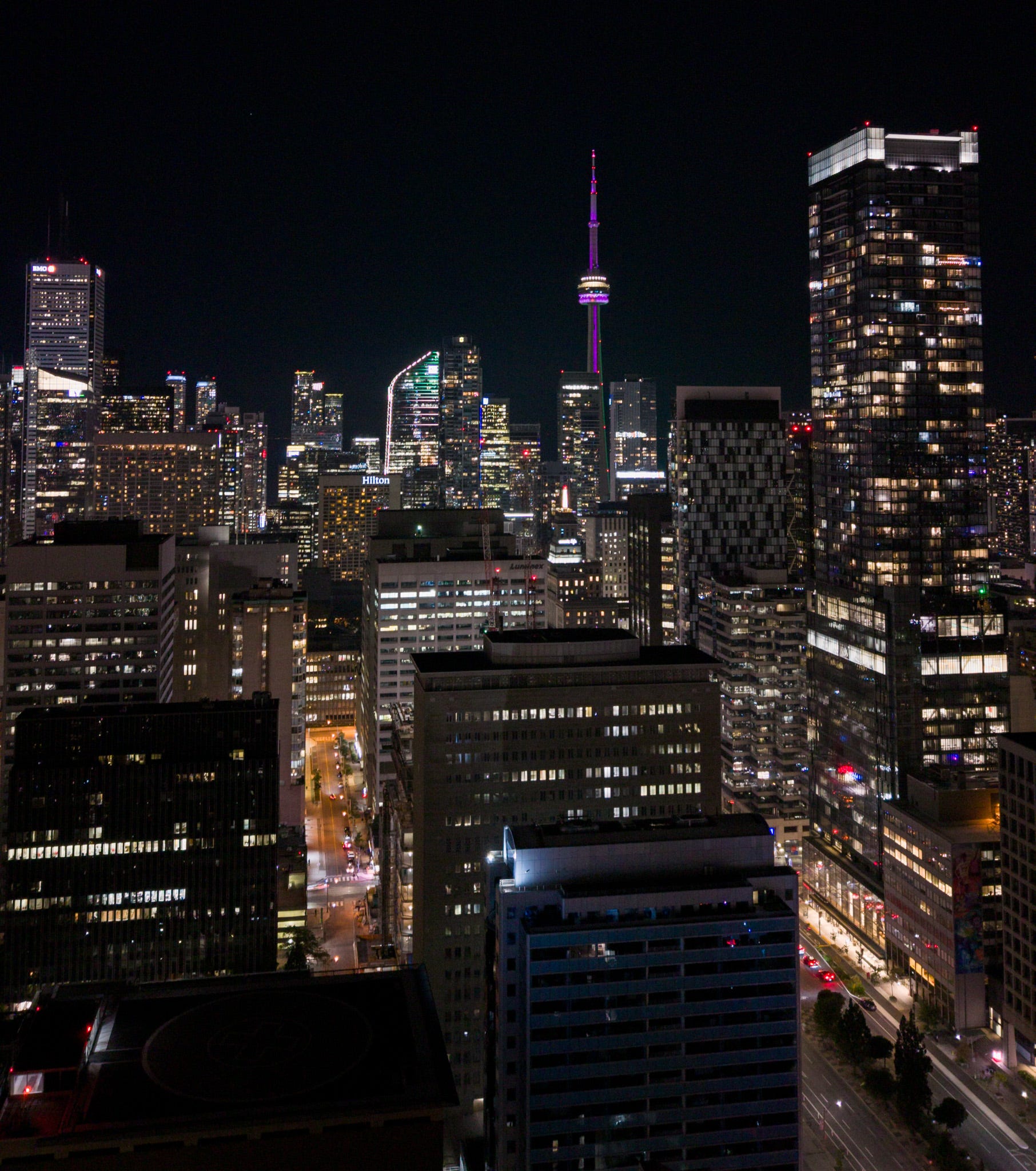
I’ve lived downtown for almost twenty years. Multiple towers. Dozens of floors. Hundreds of neighbours, if you count the unit numbers.
I can remember maybe five people who lived on my floor at the same time I did.
The guy with the terrier and the grey hoodie who always seemed to be taking out recycling at midnight. The woman who kept her shoes outside her door. Three others whose faces I’d recognize but whose names never came up because there was never a reason for names to come up.
The rest? Strangers who knew my footsteps more intimately than my face.
Behind my bedroom wall, someone coughs at 3 a.m. Above me, someone drops something hard enough that it rattles the light fixture. Across the hallway, someone gets home late enough that the sound of their keys has become familiar.
We live inside each other’s rhythms without ever learning a name.
We share air, noise, plumbing, morning moods. We share every angle except the one that matters.
⸻
There’s a ritual in condo living that no one talks about.
You get off the elevator on the same floor as someone. Neither of you acknowledges it. You both look down. Turn your head slightly. Perform this small choreography of avoidance as if politeness depends on pretending the other person doesn’t exist.
You reach your door, key already in hand, and slip inside quickly. The hallway empties. No nod. No hello. Just two people who heard each other’s alarm clocks for six months pretending they’ve never met.
It isn’t hostility. It’s something stranger.
A mutual agreement that proximity doesn’t require acknowledgment.
⸻
And then there’s the layer that complicates everything.
Every so often, a neighbour appears on Grindr. Or Instagram. Or a dating app I tell myself I’m not really using. Their face arrives on my phone before it arrives in the hallway. Their stats before their hello. Their preferences before their name.
The sequence flipped.
We know people’s preferences before we know their names.
And then we see each other in the elevator and do the strangest thing imaginable.
We pretend we don’t.
⸻
There’s the neighbour who mashes the “close door” button the moment footsteps echo down the hallway. Never waits. Never slows. Never risks an encounter that might require a nod.
There’s the retiree who spends every Friday night talking to the concierge until eleven, like the lobby is the last place in the city where someone might remember he exists.
There are the resident-champions who stack bottles neatly in the recycling room. Who hold doors on instinct. Who small-talk on muscle memory.
People I don’t know but somehow trust more than names I’ve matched with on apps.
I don’t know their names. But I know their habits. Their emotional outlines. The building becomes a theatre where everyone plays a type, and you can predict how they’ll behave long before you learn a single fact about their lives.
That’s its own kind of intimacy. Shallow. Observational. Neighbourly but, not.
⸻
When I was a kid, I knew everyone on my street. Not intimately. Just enough.
Who yelled at their kids and who didn’t.
Who drove a Civic and who drove something louder.
Who worked nights.
Who gardened.
Who hosted.
If someone bought a new pool, the neighbourhood knew before the water filled. It wasn’t surveillance. It was proximity with context.
Now there are a hundred thousand people in a six-block radius of me.
I know maybe four.
The rest are silhouettes behind smoked-glass lobby doors. Names I only hear when packages get delivered. Faces I recognize from profiles before I recognize them from life.
The city grew upward. Whatever connection used to mean didn’t make the climb.
At some point, anonymity started passing for privacy. No one objected.
⸻
Every downtown building carries the same quiet absurdity:
Online, people share their faces, bodies, preferences, and curated selves.
Offline, they treat each other like fragile ghosts who must be passed without disturbing the air.
Digital intimacy. Physical denial.
A mutual fiction where both parties silently agree to pretend the other doesn’t exist outside the screen.
It’s easier to perform distance than to risk a moment of real connection. Easier to avoid than acknowledge.
It’s the same emotional math as dating apps, just repurposed for hallways and elevators.
⸻
This might be why loneliness doesn’t feel like emptiness anymore.
It isn’t the absence of people. It’s the absence of acknowledgment.
Not emotional acknowledgment. Human acknowledgment.
A nod. A half-smile. A brief recognition that you share a building, a wall, a timeline.
That used to be nothing. Now it feels like grace.
Vertical life teaches independence until it becomes muscle memory. You learn to carry your groceries and your grief without expecting help. You learn to fix everything quietly, your sink, your schedule, your stress.
You learn to live beside people without ever living with them.
Maybe that’s adulthood. But perhaps it’s also something we didn’t mean to lose.
⸻
I still see profiles from my building scroll past sometimes. Still feel that small jolt when a face from the hallway appears on a screen. Still do the elevator dance when we cross paths the next day.
The connection never happens. The distance holds.
And I’m not sure anymore if that’s restraint or just what we’ve all agreed to.
The people behind the walls aren’t ghosts. They’re neighbours. Strangers sharing the same air, the same walls, the same quiet ambitions to be seen without being consumed.
I used to think that was loneliness.
Now I think it’s just the terms.
The city keeps stacking us closer. We keep finding new ways to stay apart.
And somewhere between the profiles and the elevators, between the footsteps overhead and the screens in our hands, we’ve built a life where proximity and connection are two entirely different things.
I just know I notice it now.
Every time the elevator doors close, a profile loads, I hear keys in the hallway and don’t look up.
It isn’t the building that creates the distance.
It’s what we’ve agreed the building should be.
And I’m still here, carrying it.