
The Signal Under the Noise
On dating, design, discipline, and finding signal in a decade tuned for noise.

You know the word everyone keeps using for this era. I won’t. Let’s just say the volume’s up, the treble’s harsh, and the room feels crowded with people talking into their own microphones. Headlines hit like caffeine shots. Feeds never end. Truth can feel like a scavenger hunt with the map torn off. I’m not here to break your doomscroll with new doom. I’m here to tune for signal: dating when you’re tired of dating, tech without the leash, design that respects your attention, and the stubborn human stuff that still matters when the internet goes quiet.
Legacy media isn’t dead so much as distracted by paywalls, pivots, think pieces about trust written in a tone that suggests the building is fine while everybody’s already in the parking lot. The gatekeepers didn’t disappear; the gate moved. It lives in feeds now, guarded by algorithms and a thousand half-known personalities fluent in certainty. Add synthetic faces and cloned voices to that, and suddenly seeing and hearing aren’t guarantees they’re suggestions. The defence isn’t paranoia; it’s craft. Provenance. Receipts. Slower thinking. Fewer exclamation points. We won’t shout here. We’ll underline.
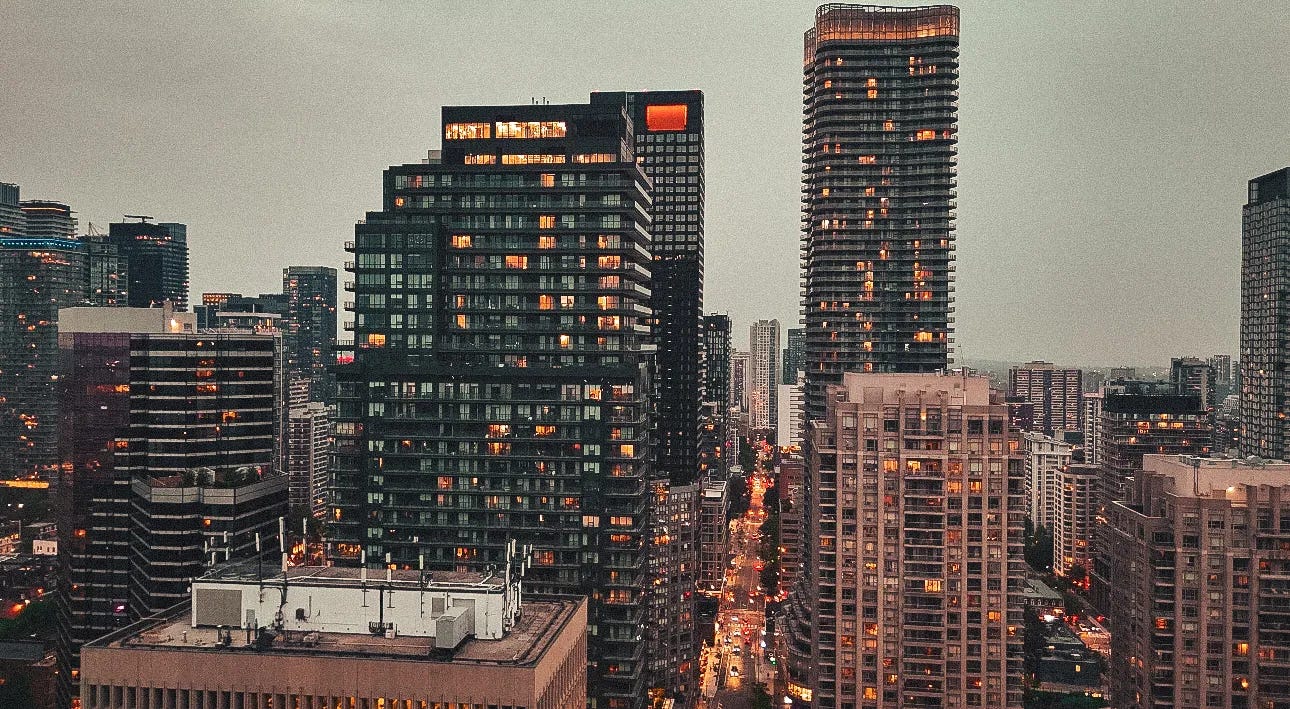
On my better days, I treat the city like a practice. Walk from Trinity Bellwoods down to the lake. Count streetcars. Let Toronto exhale. Somewhere between Ossington and the water, I remember that attention is the most valuable thing I own. I don’t want to spend it like loose change anymore. That goes for what I read, who I see, and the quiet deals I make with myself: less sugar, more sleep, fewer tabs, better calls. It’s amazing how much life returns when you stop paying a tax to hurry.
I’m not here to scold the young either. The story is messier than the think pieces. You can feel a recalibration: fewer all-nighters, more nights in; wellness not as performance but as arithmetic. Budgets drawn on the backs of takeout menus. A generation trying to make peace with a world that tells them to be brands before they’re people. And still everyone wants the mic. I get it. Ring lights are the new porch lights: flattering, friendly, a little addictive. The trouble isn’t wanting to be seen; it’s mistaking reach for worth. We used to have a middle class of attention, a bar band that paid the rent, a columnist with a neighbourhood readership. Now it’s spikes and droughts. I don’t blame anyone for chasing the spike. I just want us to keep a pulse when it fades.

There’s another drumbeat we’ve all heard: boys and young men drifting. Less anchored, less credentialed, less partnered. You don’t have to co-sign every pundit to recognize the outline. We built an economy that rewards frictionless spectacle and then wondered why showing up consistently feels like a lost art. Apprenticeships used to be a thing, not a vibe. Mentors used to be people you could bother, not accounts you could binge. Maybe the fix isn’t another discourse. Maybe it’s ladders—boring, useful ladders—bolted to actual walls.
If you’re dating at midlife, you already know the paradox. The pool is a crowded room where no one makes eye contact. Everyone says they want depth; delay is the default. I don’t say that bitterly. I’ve been the rescheduler. I’ve been the “rough week” guy. What changed for me wasn’t standards; it was sequence. I used to screen on paper first: proof of life, curated charm, the résumé of a person. Now I screen for energy. Do they ask real questions? Suggest real times? Answer like a human, not a press release? A résumé can be polished into a mirror; energy leaks through the cracks. Match energy, not titles. If someone shows up curious, meet them there. If they text like a placeholder, believe them.
Here’s the heresy that isn’t: chemistry is not a negotiation. You either have it or you don’t, and you can’t coax it from a reluctant person with perfect punctuation and emojis calibrated like lab equipment. That’s a relief if you let it be. It trades performance for presence. It makes “no” kinder. It makes rejection less personal and interest more obvious. Ask sooner. Ask like an adult: a day, a time, a place with chairs and light. Don’t pitch a movie; pick a table.
This isn’t a productivity blog in disguise, but we should talk about bodies. Past forty, your skeleton keeps receipts. The point isn’t a new program; it’s precedent, something you do often enough that it becomes part of who you are. Two lifts a week, you’d do even if no one could watch. A ride or a long walk that taxes your lungs more than your feed does. Sleep like it’s a project. Minimums beat miracles. The test isn’t a finish line; it’s stairs that don’t negotiate.
I’m not anti-technology. I’m pro-choice, the kind where you choose to delay on purpose. Keep the stack modern; make room for rituals that don’t ping. A notebook that can’t autocomplete your feelings. A meal cooked at home and eaten at a table that isn’t also a desk. A film in 4K, then the same street shot on a cheap camera just to remember what patience looks like. Call it latency control. Not nostalgia-discipline with taste.
If this sounds like restraint, it’s because we’ve spent a decade mistaking indulgence for freedom. Unlimited plans are great for bandwidth and terrible for nervous systems. I like constraints: fewer but better clothes; two social apps I actually use; one night a week unscheduled; a budget that respects future me as much as present me. Not moral righteousness, survival. The day feels bigger when it has edges.
As for truth, here’s the house style: we’ll link when it matters, name sources when the claim isn’t obvious, and say “I don’t know” when we don’t. We’ll look for denominators before outrage, incentives before certainty. If something knocks, we’ll open the door and ask for ID. The goal isn’t to win arguments; it’s to keep a level you can live with. Hot takes evaporate. Craft ages well.
So what is Urban Cassette? A B-side mindset. Essays that play like mixtapes, messy, human, unapologetically real, stitched with enough care that you can hear the bass line: less performance, more presence. We’ll talk about work that doesn’t require becoming a brand to pay the rent. Travel that remembers a city is not your backdrop. Design as ethics: fewer, better things; interfaces that don’t mug your attention. Cooking simple. Money in plain language. And yes, the politics and culture you can’t escape are handled at kitchen-table distance, with oxygen.
I don’t have it figured out. I have questions and a few working rules. Own your inputs; curate your feed like your fridge. If it makes you sick, stop buying it. Match effort at work, in love, with friends. Keep a small circle that actually shows up. Lift something heavier than your phone. Tip, like you’ll be back. Apologize without a content strategy. Call your mother if you can. Laugh at yourself, often. The internet isn’t your enemy; it’s a machine that does exactly what it’s told. Tell it less. Tell people more.
Mostly, I’m offering a second pass. The first pass is what the internet gives you: unedited takes exported straight to feed. The second pass is where we lower the treble, bring up the bass, and find the parts worth keeping. Not because we’re better or purer, but because a life is a set of small, repeatable moves that compound—quietly, stubbornly, beautifully—when the floodlights move on. The algorithm will keep chasing novelty. We can chase precedent: rituals that outlast a cycle, kindness that scales to a neighbourhood, attention that returns with interest.
If that sounds simple, good. Simple ages well. Simple survives outages, layoffs, and new versions. Simple lets you hear yourself when the room is loud. Pull up a chair. We’ll keep the levels honest, the sentences clean, the takes human. There’s a lot of noise out there. Let’s build signal—track by track—and see where it takes us.
A mixtape of modern life and the quiet recalibrations of midlife.