
Your Body Keeps Receipts
Holding strength in a body that’s lived some life

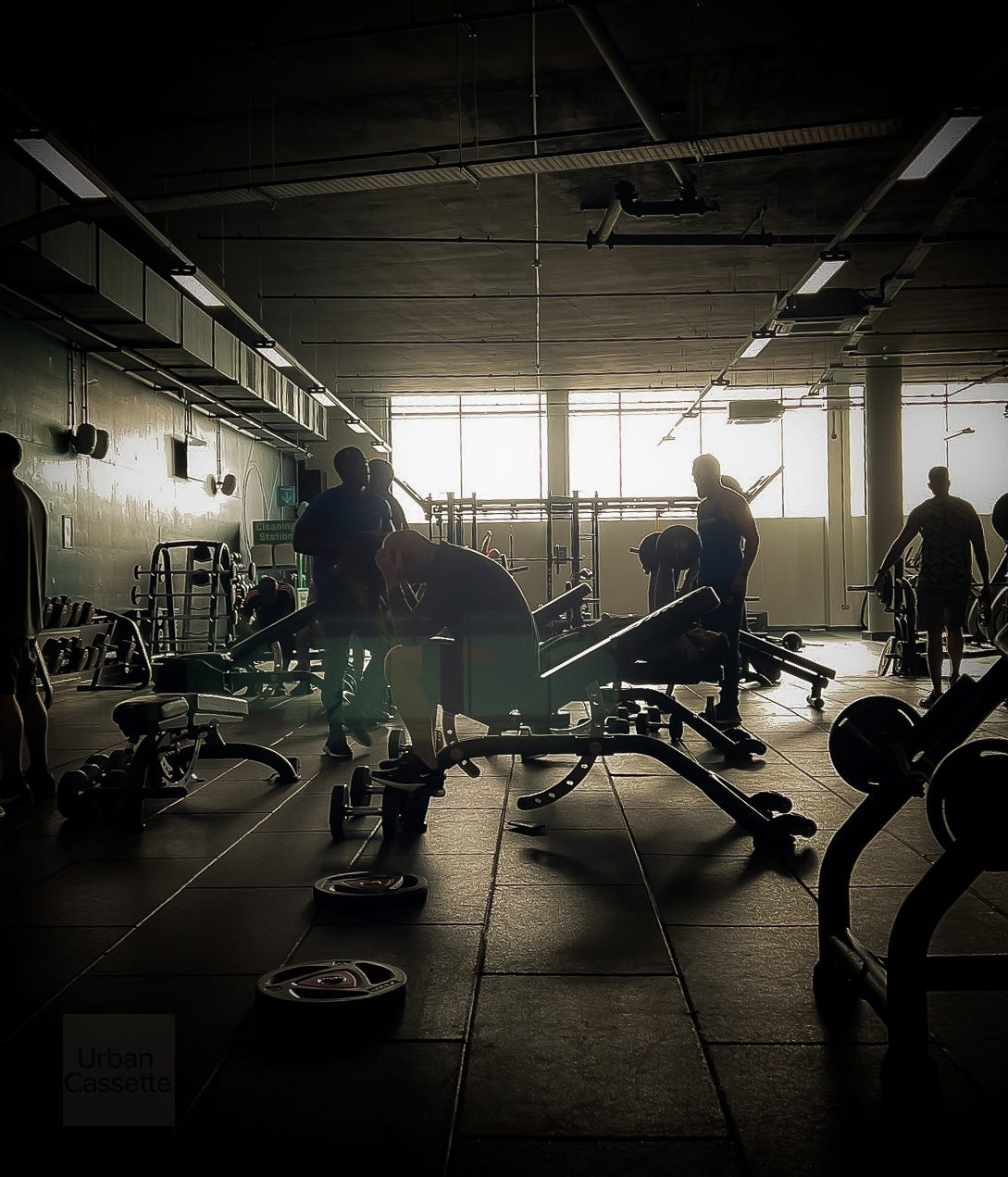
There’s a version of your body you remember from your twenties—reckless, impatient, fast for no reason. It bounced back from bad sleep, bad decisions, and bad posture with the arrogance of someone who believed time was infinite. Everything healed. Everything reset. Everything felt forgivable.
Then, somewhere in your forties, you wake up to something quietly devastating and quietly liberating at the same time:
Your body keeps receipts.
Not in a punishing way—just in a factual one. A decade of desk posture. Stress angles in your neck. The old ankle sprain that never fully apologized. Shoes that weren’t right for you. The days you sat too long, the weeks you didn’t sleep. Nothing is forgotten. Nothing is erased. It’s all archived somewhere behind your ribs.
Your body is keeping receipts—
not youth, not decline—
just the long stretch where maintenance becomes identity.
It’s not about becoming someone new.
It’s about holding onto the version of yourself you want to keep.
—
The Sweet Spot
My sweet spot is 32 kilometres on the bike. Road cycling, early or late, doesn’t matter—as long as the pavement is dry and the city’s quiet enough for your mind to stretch out a little.
I can’t run—my feet complain, my joints negotiate, my orthotics only do so much—and cycling became the compromise that never felt like one. It’s second-best on paper, maybe, but first in practice for a body that prefers impact-free movement. My sciatica doesn’t argue with it. My nerves don’t either.
There’s a moment around kilometre twelve where my brain unclenches.
A moment around kilometre twenty where I feel strong—not “for my age,” just strong for me.
And a moment around kilometre thirty where I feel—briefly—ageless.
The bike doesn’t care about your résumé or your past injuries.
It cares if you show up.
—
The Gym Mornings
Strength training has nothing to do with aesthetics now. It’s architecture.
It’s I want to lift my suitcase when I’m seventy.
It’s I don’t want back pain to dictate my mood.
It’s I’d like energy left at the end of the day, not just the beginning.
Past forty, the gym stops being a project and becomes a practice. Two or three sessions a week, enough to keep the infrastructure intact.
You start to crave the feeling of being strong more than the idea of being impressive.
There’s something steadying about that—proof that discipline ages well, even when cartilage doesn’t.
—
The Long Walks That Don’t Feel Like Work
I walk the dog a lot.
Some days it’s exercise.
Some days it’s negotiation.
Most days it’s sanity.
There’s something about moving at a pace dictated by a creature with no calendar, no deadlines, no anxiety about inboxes. A dog never wonders if it’s living up to its potential. A dog just exists—present, immediate, happy for no reason other than weather and company.
Maybe that’s the point of the middle distance:
finding places where your mind doesn’t sprint ahead of your body.
—
The Pain That Teaches You Things
Here’s what I didn’t understand until my mid-forties:
Pain isn’t a crisis.
Pain is information.
Your back hurts because stress never leaves quietly.
Your feet hurt because you ignored them when they were whispering.
Your shoulders hurt because you’re holding more than breath.
A younger body forgives everything.
An older body demands negotiation.
Recovery matters more than intensity.
Skipping too long makes everything harder.
Small consistencies beat heroic attempts.
Movement is the only anxiety medication that works every single time.
—
The Body You Want to Keep
When I think about what “in shape” means now, it’s simple:
Energized.
Strong.
Pain-free.
Not shredded.
Not optimized.
Not impressive to strangers.
Just capable enough that life doesn’t feel physically expensive.
There’s no finish line anymore—just maintenance, calibration, small rituals done often. Strength isn’t a destination; it’s a currency.
And in midlife, the rate of exchange changes.
Your body rewards you for showing up, not for showing off.
—
Distance Is the Real Race
Nobody teaches you this part.
We celebrate the extremes—beginnings, transformations, finish lines.
The middle is quieter. Less cinematic. More honest.
The middle distance is where you realize:
You’re not chasing youth.
You’re not preparing for decline.
You’re building the version of yourself you plan to live in.
Movement becomes a way to keep your mind from outrunning your body.
Discipline becomes a way to feel proud of yourself on days when nothing else cooperates.
Strength becomes a love language you offer your future self.
This isn’t a comeback story.
It’s a staying story.
A commitment to remain, someone, you recognize—
not faster than you were, not stronger than you look—
just here. Capable. Grounded. Able to carry your own life without resentment.
The world will keep speeding up.
Bodies won’t.
That’s not a flaw.
It’s a reminder:
Some things are meant to take time.
Some things are meant to be maintained.
And some things—your heart, your legs, your breath—
are meant to carry you as far as you’re willing to go,
one consistent mile at a time.